.png)
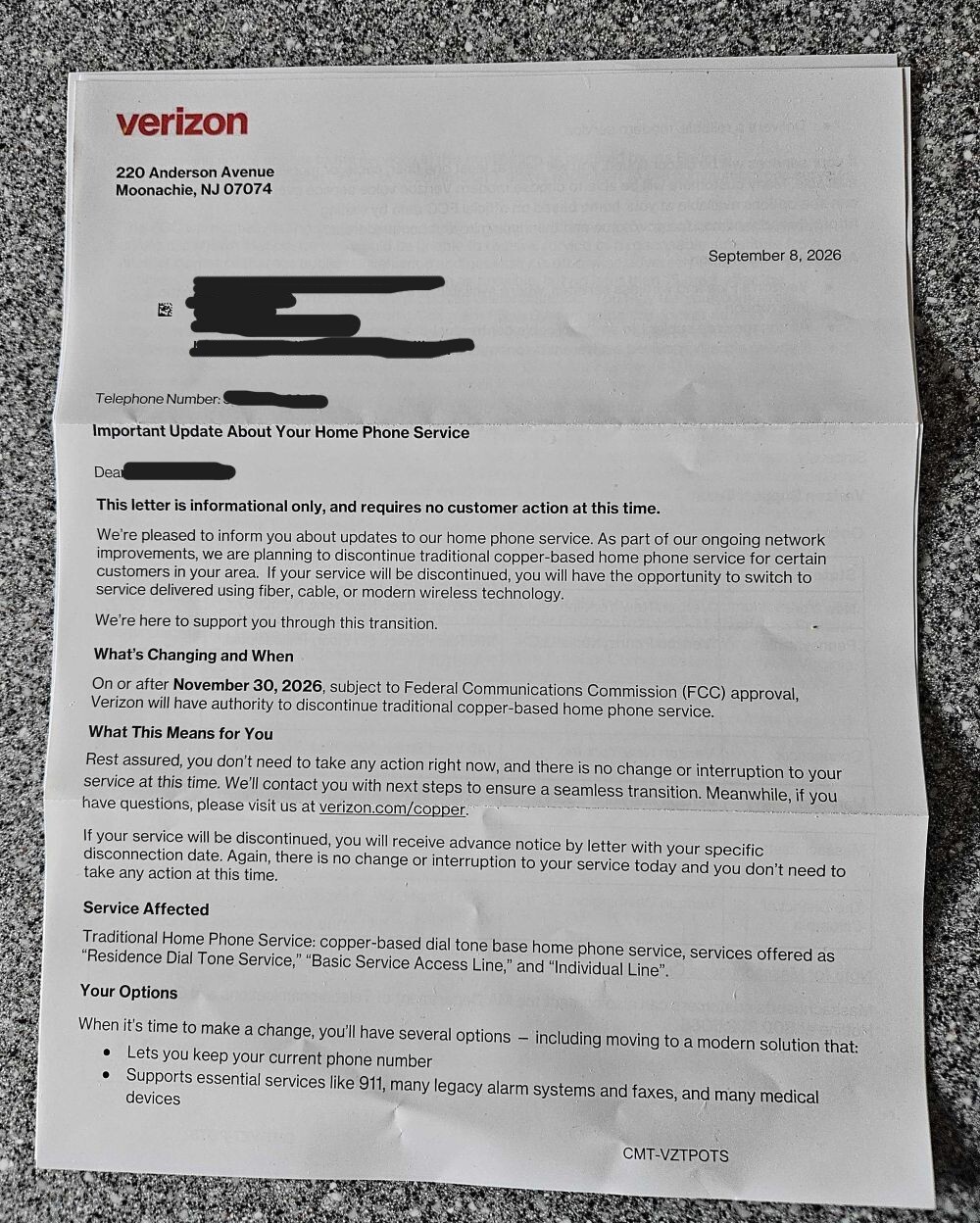
 We've recently heard from several clients who received letters from Verizon about the retirement of traditional copper phone lines - particularly at their homes.
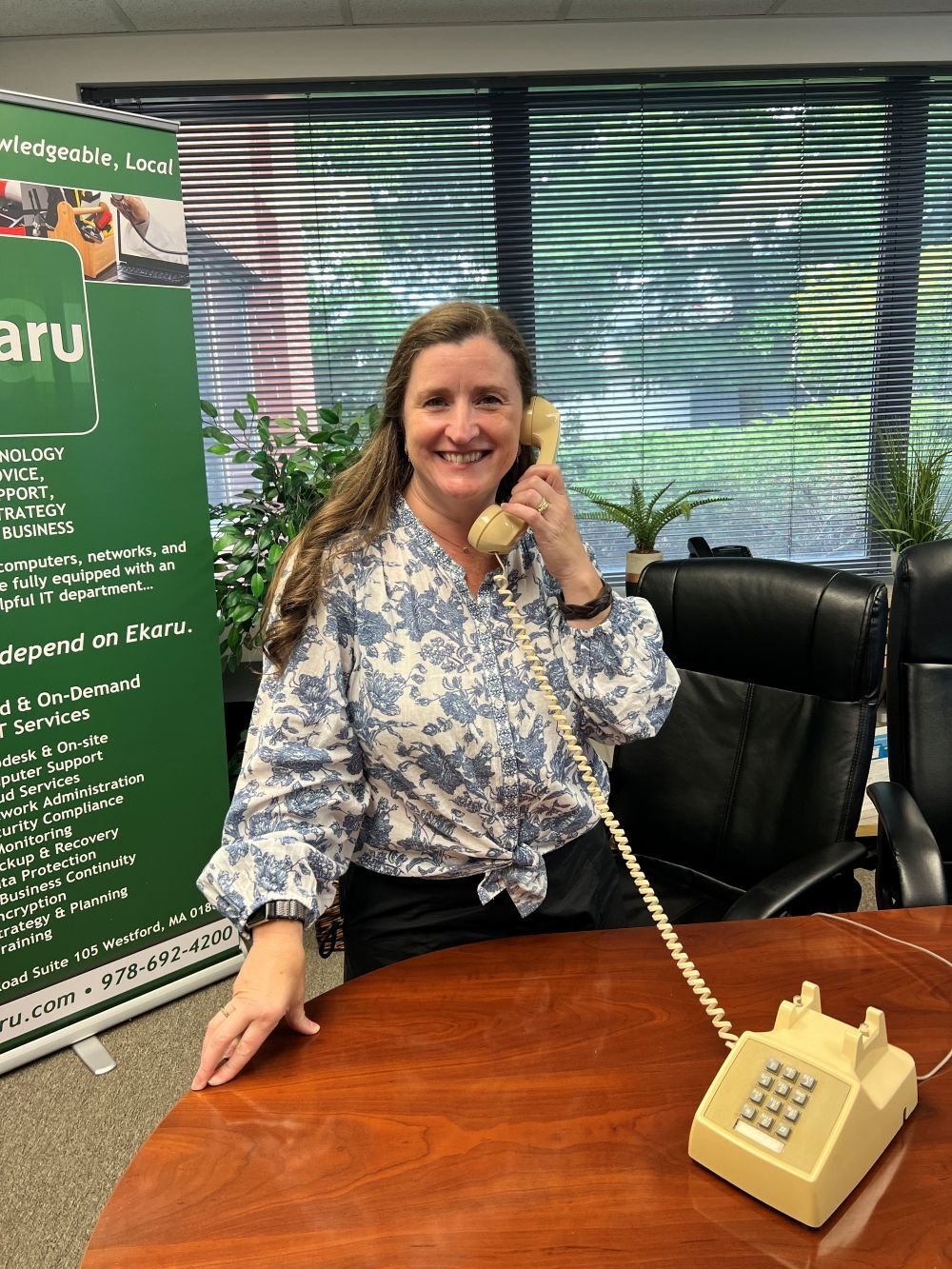
Linda also recently received one of these letters from Verizon, and it got us talking. She still keeps an old-fashioned corded phone in her basement - not because she's nostalgic for the days of tangled phone cords, but because it has served a very practical purpose: When one of those big New England storms comes through and the power goes out, that old phone still works. No electricity. No Wi-Fi. No modem or router. Just plug the phone into the copper phone jack and get a dial tone!
If you received a letter too, you may be wondering: What does this mean? Is my phone line going away? And do I need to do anything?
We started looking into the details and realized there's more to this transition than simply replacing an old-fashioned telephone line.
Copper phone lines have been around for generations, and they may still support things you don't immediately think about - including alarm systems, fax machines, medical devices, elevator phones, fire panels, and other equipment. There are also important differences between traditional copper service and newer technologies when it comes to power outages and backup power.
So whether you received a notice for your home or your business, it's worth understanding what's changing before making any decisions.
Why Is Verizon Retiring Copper Phone Lines?
Verizon is modernizing its network and transitioning away from its aging copper infrastructure toward newer fiber and wireless technologies. They have been working on this for many years.
According to Verizon, customers affected by the transition will receive advance notice, and an approved replacement service will be available before existing copper service is discontinued.
For many people, the transition may be relatively straightforward. If the line is simply being used for telephone calls, there are plenty of modern alternatives.
But before you replace or cancel a copper line, there's an important question to answer:
What is connected to it?
Your Copper Line May Be Doing More Than You Realize
When we say "phone line," most of us picture a telephone.
But traditional copper lines - often referred to as POTS lines, or "Plain Old Telephone Service" - have been used for all kinds of equipment over the years.
Your line could be supporting:
- A home or business security system
- A fire alarm panel
- An elevator emergency phone
- A fax machine
- A medical alert or other medical device
- An entry or intercom system
- An emergency or backup telephone
- Other older equipment designed to communicate over an analog phone line
Some of these systems may have been installed years ago and simply continued working in the background.
That's why we wouldn't recommend simply disconnecting a copper line until you know exactly what depends on it.
What About Your Alarm System?
This is one of the first questions we're hearing.
If your home or business alarm system communicates with its monitoring company over your copper telephone line, contact your alarm company before making a change.
Many modern alarm systems no longer need a traditional telephone line. Depending on the equipment, a cellular communicator or a combination of cellular and Internet connectivity may be a better long-term solution.
The key is not to assume that an ordinary VoIP phone line is automatically the right replacement for an alarm line.
And for specialized systems such as commercial fire alarms, additional codes and requirements may apply, so the appropriate alarm or fire-system provider should be involved before the existing line is disconnected.
One Big Difference: What Happens When the Power Goes Out?
There's one remarkable feature of the old copper telephone network that's easy to overlook because, for decades, we simply took it for granted:
Your copper phone line didn't depend on the electricity in your house. The telephone network provided the power.
Traditional landline phones received their power from the telephone company's central office, they didn't depend on your local electric service. Those facilities were equipped with large battery systems and backup generators designed to keep the telephone network operating during power failures and major emergencies. Copper phone lines have been used for around 150 years! Yes, its been a while!
The resilience of the old Bell System went far beyond the occasional power outage. During the Cold War, significant portions of the telecommunications network were engineered with hardened facilities, redundant routes, and extensive backup power as part of an effort to keep critical communications functioning even in catastrophic events - including the possibility of nuclear attack. Its the end of an era.
That's an extraordinary level of resilience when you think about what it meant in everyday life.
Here in New England, imagine an ice storm takes down power across your area and your home is without electricity for several days. With a traditional copper line and a simple corded telephone, you could still pick up the phone, hear a dial tone, and make a call - without a modem, router, Wi-Fi, or electricity in your home. The fiber, cable, and Internet-based phone lines typically include a local battery backup, but that won't last long enough for a New England storm!
That doesn't make the newer technology worse. But it does mean that something the old telephone network provided inherently - power and resilience during an outage - now needs to be considered as part of your own backup-power planning. Remember to keep your cell phone charged, and consider getting a generator.
It's something worth planning for.
Can I Keep My Existing Phone Number?
Short answer, Yes! According to Verizon, customers can port their existing telephone number to another Verizon service or to another service provider.
So the retirement of the copper infrastructure doesn't necessarily mean giving up a telephone number you've had for years.
What Should You Do If You Received a Letter?
First, don't panic - but don't ignore it.
Before changing or canceling anything:
- Identify the telephone number referenced in the notice.
- Determine what's connected to that line.
- Check whether an alarm, medical device, fax, emergency phone, or other equipment depends on it.
- If specialized equipment is involved, contact the company that services that equipment.
- Consider what will happen during a power or Internet outage.
- Then determine which replacement option makes sense for your situation.
The right answer won't necessarily be the same for everyone. Keep in mind also that the changes still need to be approved by the FCC so this will take a while.
Technology Changes. Make Sure You're Ready.
Copper phone lines have quietly served homes and businesses for decades. Most of us probably never thought much about the infrastructure behind them - because it simply worked. I've had the same home phone number for over 25 years, and made the switch from copper to fiber many years ago.
Now that the network is changing, it's worth taking a few minutes to understand what you have before it's replaced. Plan ahead for reslience!
We've already had clients reach out to us after receiving these Verizon notices, and we're happy to help answer questions about the technology and your options.
Want the Full Update Directly From Verizon?
For the latest information about Verizon's copper network retirement, replacement options, frequently asked questions, and what to expect if your service is affected, visit Verizon's official Network Modernization page:
Verizon Network Modernization - Copper Replacement Information
https://www.verizon.com/copper/
Here is some additional information from the FCC regarding the technology changes:
Tech Transitions - Modernizing Communications Services
If you've received a letter and aren't sure what it means for your home or business - or you're not sure what's actually connected to your existing copper line - reach out to Ekaru. We're happy to help you understand your options and plan your next steps.
About the author:

Ann Westerheim, PhD is the Founder and President of Ekaru, a Technology Service Provider of cybersecurity and IT services for small and medium businesses in the greater Boston area. Ann is an accomplished technology innovator and leader with three engineering degrees from MIT. She has twenty years of high tech experience in research, advanced development, product development, and as an entrepreneur. Her career has spanned a vast range of technology endeavors including research in thin film semiconductors and superconductors, microprocessor fabrication, development of early Internet medical applications, and now focusing on the application of technology in business. She has an avid focus on the "last mile" of technology and decreasing the digital divide.