.png)
 Every year, the IRS releases its list of the “Dirty Dozen” - the most common tax scams they’re seeing across the country.
And every year, we have the same conversation with clients:
“I got an email that looked official… I just wanted to double-check before I clicked anything.”
This year’s list for 2026 is a reminder of something we’re seeing more and more - scammers aren’t just targeting individuals anymore. They’re going after small businesses, nonprofits, and busy teams who don’t have time to second-guess every message.
Let’s break down what matters most - and what to watch for.
The IRS “Dirty Dozen” tax scams for 2026 highlight the most common ways scammers target taxpayers and small businesses - from phishing emails and fake charities to misleading tax credits and identity theft. Understanding these scams can help you avoid costly mistakes, protect sensitive information, and reduce your risk during tax season.
Why This Matters More Than Ever in 2026
Tax scams aren’t new. But they are getting more convincing.
The IRS continues to warn that many of these scams:
- Look like they come from trusted sources
- Use urgency to pressure quick decisions
- Target people during already stressful times (like tax season)
What’s changed is how polished and believable these scams have become. With better design, more personalized messaging, and even AI-generated content, it’s getting harder to tell what’s real.
👉 This is where we often see even the most careful business owners get caught off guard.
The Biggest Tax Scam Trends We’re Seeing Right Now
Here's an overview of the "Dirty Dozen" list from the IRS. Here is a full list with a description in plain English about what it means.
1. IRS impersonation by email and text (phishing + smishing).
These messages may look official - logos, formatting, even “case numbers.”
They often say things like:
- “You have a pending tax issue”
- “Immediate action required”
- “Click here to avoid penalties”
What to know:
The IRS does not initiate contact this way.
👉 Watch out for:
We’ve had clients forward emails that looked incredibly real to other people on the team and then suddenly the email is from a "trusted source" - Talk to your team!
2. AI-Enabled IRS Impersonation by Phone (Robocalls, Voice Mimicry, Spoofed Caller ID)
Phone scams are getting more advanced - and more convincing.
Scammers are now using:
- Robocalls that sound more natural (Cyber criminals use AI too!)
- Spoofed caller ID to appear legitimate
- AI-generated voices that can mimic real people
These calls often create urgency or fear, pushing you to act quickly.
What to know:
The IRS typically contacts taxpayers by mail first. They will not call to demand immediate payment, threaten arrest, or leave urgent prerecorded messages.
👉 Watch out for:
We’ve seen situations where a call looks legitimate because the caller ID appears to match a real organization - or even a known contact.
That false sense of familiarity is what scammers are counting on.
If something feels off, hang up and call back using a number you trust (like the official IRS website or your known contact). And as AI tools become more common, it’s also worth double - checking any tax advice or calculations they generate - don’t take them at face value.
3. Fake Charities
Scammers often take advantage of tragedies and disasters by creating fake charities.
They use emotional appeals to:
- Encourage quick donations
- Collect personal or financial information
- Take advantage of people trying to do the right thing
What to know:
Charitable donations are only tax-deductible if they go to a legitimate, IRS-recognized organization.
👉 Watch out for:
We often see donation requests come through email or even shared within teams, especially after a major event. Someone wants to help, shares the link internally, and before you know it, multiple people are donating to something that hasn’t been verified.
A quick check can make all the difference. If you’re not sure, take a moment to confirm the organization is legitimate before clicking or contributing.
4. Misleading Tax Advice on Social Media
“Tax hacks” are everywhere right now, and some of them are flat-out wrong.
These posts often:
- Promise unusually large refunds
- Suggest writing off personal expenses as business costs
- Encourage claiming credits you may not qualify for
What to know:
Following bad advice - even if you found it online - can lead to refund delays, audits, penalties, or worse. If a return is knowingly inaccurate, it can also lead to serious consequences.
👉 Watch out for:
We’ve had conversations with clients who came across something online that sounded legitimate - especially when it’s explained confidently or backed by lots of comments.
The challenge is, these posts rarely apply to your specific situation.
If something seems like a “shortcut” or a loophole, it’s worth double-checking with a trusted source before acting on it. A quick question now can prevent a much bigger issue later.
5. Identity Theft Involving IRS Online Account Access
Scammers may try to access your IRS online account using stolen personal information, or offer to “help” set it up while collecting sensitive details.
This can include:
- Social Security numbers
- Login credentials
- Financial or tax information
What to know:
You should always create and access your IRS account directly through IRS.gov, not through a third party who reaches out to you.
👉 Watch out for:
We’ve seen situations where someone offers to “walk you through” setting up an account, especially if it feels confusing or time-sensitive.
But handing over that kind of information - even with good intentions - can open the door to identity theft.
When it comes to accounts like this, it’s always safer to go directly to the source and keep control of your own access.
6. Abusive Undistributed Long-Term Capital Gains Claims (Form 2439)
This one is a bit more technical, but the idea is simple.
Some scammers are encouraging people to claim refunds using Form 2439, even when they don’t qualify.
These schemes may involve:
- Claiming credits tied to investments you don’t actually have
- Using fake or inflated numbers
- Referencing well-known organizations to make the claim seem legitimate
What to know:
This credit is meant for very specific situations involving certain investment funds or real estate trusts. Most taxpayers won’t encounter it in normal filings.
👉 Watch out for:
If you’re being told you qualify for a credit you’ve never heard of - especially one tied to investments you don’t clearly recognize - that’s a sign to pause.
We’ve seen scams become more convincing by name-dropping legitimate organizations to build trust.
When something gets overly complex or unfamiliar, it’s always worth getting a second opinion before moving forward.
7. Bogus “Self-Employment Tax Credit” Promotion
This scam targets self-employed individuals with promises of large refunds.
You may see:
- Ads or messages promoting a “special” tax credit
- Claims that it applies broadly to freelancers or business owners
- Little to no review of your actual financial situation
What to know:
Many taxpayers simply do not qualify for this credit. The IRS is closely reviewing these claims, and filing incorrectly can lead to audits, delays, or penalties.
👉 Watch out for:
We’ve seen these promoted in ways that make it sound like an easy win - especially for busy business owners who don’t have time to dig into the details.
If someone is encouraging you to claim a credit without fully understanding your situation, that’s a red flag.
It’s always better to take a few extra minutes to verify than deal with a much bigger issue later.
8. Ghost Preparers
A “ghost” preparer is someone who completes your tax return but refuses to sign it or include their Preparer Tax Identification Number (PTIN).
At first glance, everything may seem normal - but behind the scenes, they’re avoiding accountability.

What to know:
If a preparer won’t sign your return, that’s a major red flag. You, as the taxpayer, are still legally responsible for everything that gets filed.
👉 Watch out for:
We’ve seen situations where someone offers quick, low-cost help - but disappears when questions come up later.
Another warning sign? Being asked to sign a blank or incomplete return.
A trustworthy tax professional will stand behind their work, include their credentials, and make sure you understand what’s being filed on your behalf.
9. Non-Cash Charitable Contribution Schemes
Some scams involve donating items like property or art - and then inflating their value to claim a much larger tax deduction.
These schemes are often promoted as a way to:
- Significantly reduce your tax bill
- Offset large amounts of income
- Take advantage of “special” donation strategies
What to know:
The IRS is actively reviewing these types of claims. If values are exaggerated or unsupported, it can lead to delayed refunds, audits, or penalties.
👉 Watch out for:
We’ve seen these positioned as sophisticated tax strategies, sometimes with polished presentations or complex explanations.
But if the main message is that you can dramatically reduce your taxes through a single move, it’s worth taking a closer look.
When something sounds too good to be true - especially when it comes to taxes - it usually is. And honestly, that old advice still hasn’t changed.
10. Overstated Withholding Schemes
This scam involves inflating how much tax was supposedly withheld from your income to generate a larger refund.
It may involve:
- Reporting incorrect income amounts
- Claiming withholding that never actually happened
- Submitting forms with fabricated or altered information
What to know:
The IRS cross-checks this information with employer and financial records. If something doesn’t match, your return may be delayed - or flagged for further review.
👉 Watch out for:
We’ve seen variations of this where it’s presented as a “strategy” to increase your refund, often with complicated explanations or references to different tax forms.
But at the end of the day, if the numbers don’t reflect reality, it’s going to raise red flags.
This is one of those situations where trying to “game the system” can quickly turn into penalties or enforcement action.
11. Spear-Phishing and Malware Campaigns Targeting Businesses and Tax Professionals
Scammers are sending highly targeted emails that appear to come from new clients or legitimate contacts.
These messages often include:
- Attachments or links that install malware
- Requests for sensitive client or financial information
- Familiar-looking conversations pulled from real (but compromised) email threads
What to know:
These attacks are designed to get inside your systems - once that happens, attackers may access sensitive data, financial information, or client records.
👉 Watch out for:
We’ve seen emails that look like completely normal business inquiries - sometimes even continuing a real email thread from a previously compromised account.
That’s what makes them so convincing.
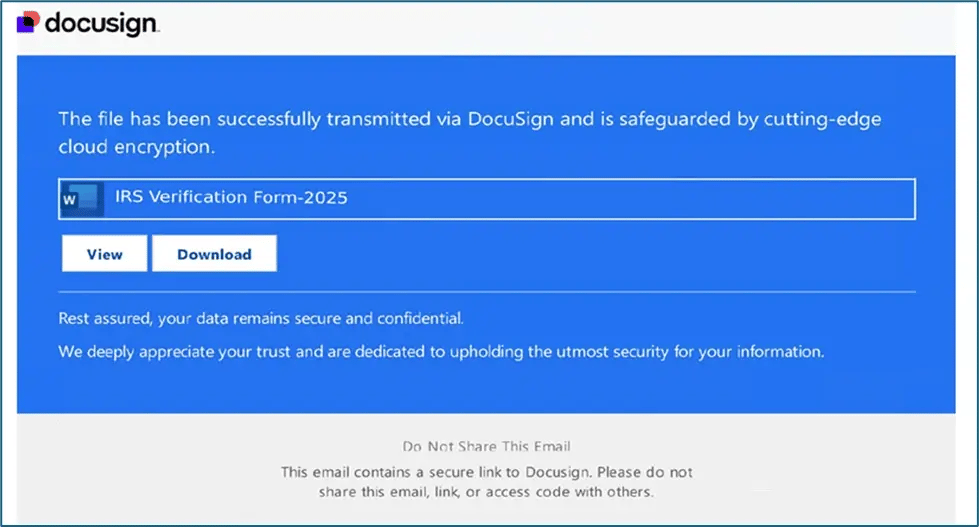
If something feels even slightly off - like an unexpected attachment, a strange request, or a subtle mismatch in the sender’s address - it’s worth taking a second look before clicking or responding. Also note that many cyber criminals abuse legitimate tools like Microsoft, Intuit, or DocuSign, so these emails WILL get through basic email security scanning.
12. Aggressive or Misleading Offer in Compromise Marketing (“OIC Mills”)
The IRS Offer in Compromise (OIC) program can help some taxpayers settle their tax debt - but it’s not a fit for everyone.
Some companies (often called “OIC mills”) take advantage of this by:
- Promising to settle tax debt for far less than owed
- Charging high upfront fees
- Encouraging people to apply even when they’re unlikely to qualify
What to know:
The program is legitimate - but eligibility is specific. Not everyone qualifies, and applying without meeting the criteria can waste time and money.
👉 Watch out for:
We’ve seen these services advertised in ways that sound like a guaranteed solution - especially when someone is feeling stressed about tax debt.
High-pressure sales tactics are a red flag.
If you’re considering something like this, it’s worth taking a step back and checking eligibility through official IRS resources or getting a second opinion before committing.
What All of These Scams Have in Common
Even though they look different, most of these scams rely on the same tactics:
- Urgency – “Act now or face consequences”
- Authority – Pretending to be the IRS or a trusted professional
- Opportunity – Promising money, refunds, or savings
- Confusion – Catching people when they’re busy or overwhelmed
If something checks more than one of these boxes, it’s worth pausing.
What We Recommend to Clients (Simple, Practical Steps)
You don’t need to become a cybersecurity expert to stay safe. A few simple habits go a long way:
- Slow down – Scammers rely on quick reactions
- Don’t click first – Go directly to official websites instead
- Verify requests – Especially anything involving money or sensitive data
- Train your team – One click from one employee can impact the whole organization
- Have a go-to IT partner (like Ekaru!)– Someone you can quickly ask, “Does this look right?”
👉 If you DO click on a bad link, this is where security awareness training and security tools make a big difference. Encourage your team to speak up, and if you're not already applying email security tools, a small investment can make a BIG difference!
A Quick Note on the IRS Itself
It’s worth repeating:
The IRS will not:
- Email, text, or message you on social media to demand payment
- Threaten immediate arrest or legal action
- Ask for sensitive information through unsecured channels
When in doubt, go directly to IRS.gov or speak with a trusted advisor.
Final Thought: You Don’t Have to Figure This Out Alone
If there’s one thing we’ve learned, it’s this:
Most people who fall for scams aren’t careless - they’re busy.
They’re running businesses, managing teams, and trying to keep everything moving. And scammers take advantage of that.
If you ever get something that feels “off,” even slightly, it’s worth a second look.
We’re always happy to take a quick look and give you a straight answer - no pressure, no judgment.
Sources & Further Reading
- IRS Dirty Dozen Tax Scams for 2026
- Search for Tax Exempt Organizations
- Choosing a Tax Professional
- Recognize Tax Scams and Fraud
- Report Fraud to the IRS
- Microsoft Threat Intelligence: Threat actors leverage tax season
- IRS: Don't be victim to a "ghost" tax return preparer
About the author:

Ann Westerheim, PhD is the Founder and President of Ekaru, a Technology Service Provider of cybersecurity and IT services for small and medium businesses in the greater Boston area. Ann is an accomplished technology innovator and leader with three engineering degrees from MIT. She has twenty years of high tech experience in research, advanced development, product development, and as an entrepreneur. Her career has spanned a vast range of technology endeavors including research in thin film semiconductors and superconductors, microprocessor fabrication, development of early Internet medical applications, and now focusing on the application of technology in business. She has an avid focus on the "last mile" of technology and decreasing the digital divide.